Author name: Admin

"Digital Tanu is a freelance digital marketer based in Mumbai, specializing in SEO, SEM, social media marketing, performance advertising, and graphic design. With a passion for digital innovation and online growth, Digital Tanu helps businesses strengthen their online presence, improve brand visibility, and generate quality leads through effective, data-driven marketing strategies. By combining creativity with analytical skills, Digital Tanu creates engaging marketing campaigns and attractive designs that drive audience engagement and increase conversions."

Uncategorized

Best Digital Marketing Courses in Borivali 2026 with Placement

Are you looking for the best digital marketing courses in Borivali? Learn better in digital marketing through our comprehensive, success-oriented course! Our innovative curriculum goes far beyond the basics of digital marketing. We’ve integrated the latest advances in AI tools into your learning so that you stay on top of the most evolved marketplace. And there are quite a few trade secrets about the memorable ideas and tactics here that make our course special. At Digital Marketing Institute Borivali, come learn the skills and abilities you’ll need to excel in today’s competitive environment, no matter your background. AI is transformative in nature and forms a large theme of our dynamic curriculum. Hence, you will not only stay ahead of the curve but also revolutionize your marketing strategy. What is the scope of digital marketing in India? Digital marketing happens to have been an integral part of modern business strategy, and India is no different. As increasingly more people in India are hooking up their computers to the internet, digital marketing is becoming ever more important than ever. The scope of digital marketing in India is huge and offers endless opportunities for businesses to grow and reach their target audience. In this blog post, we will discuss the scope of digital marketing in India and how it can help businesses in the country. India is inhabited by over 1.3 billion people, and approximately 50 percent use the Internet. This figure is only expected to increase in the near future as the government invests in digital infrastructure and more people start accessing the internet. Nowadays, the country enjoys using social media service providers such as Facebook, Twitter, Instagram, and LinkedIn, which are among the most widely used services by millions of users who log into their accounts daily. 5 Best Digital Marketing Courses in Borivali are listed below: Institute Name Contact Number Fees Internship/Placement Course Duration Location Grow Digital Institute 8291523575 35,000/- Yes 4 Months Borivali Lips India 9833201420 32,000/- – 4 Months Borivali Freelancer Academy 9082006765 50,000/- Yes 4 Months Borivali IIDE 9619958615 1,15,000/- Yes 6-11 Months Borivali Operating Media 7700022882 40,000/- Yes 4 Months Borivali 1. Best Digital Marketing Courses in Borivali Grow Digital Institute One of the best digital marketing institutes in Borivali, Mumbai. Grow Digital Institute offers advanced courses in digital marketing. Our team of trainers is highly qualified and committed to giving their best participants the greatest practical training. Digital Rohan Thakur, one of our team’s experienced trainers, has six years of professional expertise and a passion for training. They will guide you through our comprehensive curriculum, which includes PPC advertising, email marketing, social media marketing, SEO, and more. We feel proud of our student’s achievements and help them start their careers in digital marketing by helping them find jobs. Our Advanced Digital Marketing Courses are designed to provide you with the skills you need to become an expert in digital marketing. We believe that digital marketing is 80% practical implementation and 20% theory, which is why our curriculum focuses on hands-on learning through projects and practical exercises. At Grow Digital Institute, we believe in providing our students with hands-on experience, so you can expect to work on real-life projects and gain practical knowledge to apply in the real world. Grow Digital Institute offers Advanced Digital Marketing Courses, SEO Courses, Social Media Marketing Courses, and Website Development Courses Advanced Digital Marketing Courses In Borivali Syllabus 2026 Enroll in the  Digital Marketing Course at Grow Digital Institute! With the help of our well-designed curriculum, students are getting extensive and beneficial training that will help them succeed in the quickly changing field of digital marketing. Digital Marketing Tools & Platform We cover Strategies of AI Tools in our Latest Digital Marketing Course Take your digital marketing skills up a notch with our all-inclusive, result-based course! Creative curriculum in digital marketing: Develop the best practices of digital marketing at the next level with the latest artificial intelligence tools and make them work for you. Learn the trade secrets behind memorable ideas and tactics that make our course stand out!. Whether you are one of the novices or a seasoned pro, our digital marketing courses in Borivali will surely help you outdo in this highly competitive environment. The transformative power of AI is one of the primary themes in the dynamic curriculum we have, and this will be sure to help you stay ahead of the curve as well as revamp your marketing strategy. Advanced Course Benefits Grow Digital Institute Course Duration 4 Months (Monday – Saturday), Daily – 2 hours Fees 35,000/- Website growdigitalinstitute.com Contact Number +91 8291523575 Address B/4 – Ground Floor, Dwarkwsh Building, L.T Road, Borivali West Modules & Ai Integrated Syllabus 45+ Major Modules & Yes Placement Assurance Yes         Students Gallery Name * First Last Numbers * Email * Message * Send Message 2. Best Digital Marketing Courses in Borivali Lips India LIPSINDIA, located in Borivali, is a leading destination for premium digital marketing training. With a successful track record of training 5000+ digital marketers, the institute offers an exhaustive digital marketing course curriculum. The course structure emphasizes hands-on practical learning on all digital marketing channels, including Search Engine Optimization, Social Media Marketing, Google AdWords – PPC, Display Marketing, E-mail Marketing, Ad-server, Affiliate Marketing, Mobile Marketing, Analytics, and other relevant tools. LIPSINDIA prides itself on providing instruction from industry experts. The institute offers both classroom training and online live training programs, with the option for weekday or weekend training to accommodate students’ schedules. Course Benefits Lips India Course Duration 4 Months Fees 32,0000/- Website lipsindia.com Contact Number 9833201420 Batch Weekdays Address Borivali Placement Assurance Yes 3. Best Digital Marketing Courses in Borivali Freelancer Academy Freelancers Academy is one of the best institutes for digital marketing training and one of the few centers which has its own in-house digital marketing agency. They are targeting the gap by building a course which can help people to get an opportunity to work on “LIVE PROJECTS” […]
Uncategorized

What are the different types of digital marketing?

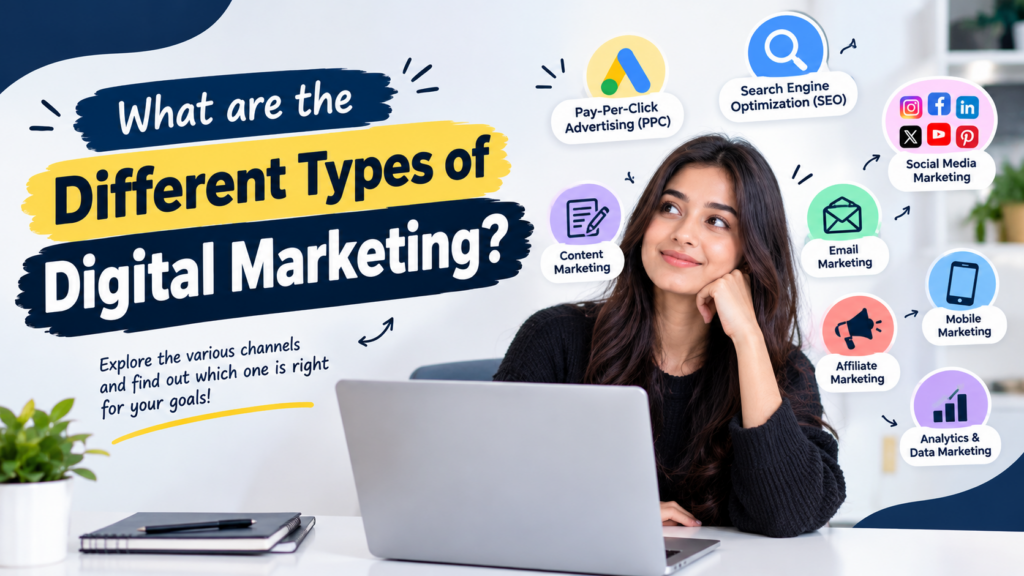
Digital marketing includes several methods that businesses use to promote their products and services through digital channels. Each type has a different purpose, and businesses often combine multiple methods to achieve better results. 1. Search Engine Optimization (SEO) SEO is the process of improving a website’s visibility in organic search engine results. It includes keyword research, website optimization, quality content creation, and link building. SEO helps businesses attract visitors who are searching for relevant information, products, or services. 2. Search Engine Marketing (SEM) and Pay-Per-Click (PPC) Paid search advertising helps businesses display advertisements on search engines such as Google. With PPC advertising, businesses generally pay when someone clicks on their ads. This can help generate targeted website traffic, leads, and sales. 3. Social Media Marketing Social media marketing involves promoting a business on platforms such as Instagram, Facebook, LinkedIn, and YouTube. Businesses use posts, videos, stories, and paid advertisements to connect with their audiences and build brand awareness. 4. Content Marketing Content marketing focuses on creating valuable content, such as blog posts, articles, videos, guides, and infographics. Its purpose is to educate audiences, answer their questions, build trust, and attract potential customers. 5. Email Marketing Email marketing involves sending newsletters, promotional offers, updates, and personalized messages to subscribers. It helps businesses maintain customer relationships, share information, and encourage repeat purchases. 6. Affiliate Marketing Affiliate marketing allows individuals or businesses to earn commissions by promoting another company’s products or services. Affiliates use special tracking links to generate sales or other agreed-upon actions. 7. Influencer Marketing Influencer marketing involves collaborating with content creators who have an established audience. Businesses use these partnerships to introduce products, reach new customers, and build credibility. 8. Video Marketing Video marketing uses videos to promote products, explain services, share tutorials, and tell brand stories. Businesses can publish videos on YouTube, Instagram Reels, and other digital platforms. 9. Mobile Marketing Mobile marketing reaches customers through smartphones using mobile-friendly websites, apps, SMS messages, and push notifications. Businesses use it to communicate offers and make information accessible to mobile users.

Uncategorized

Why Is Digital Marketing Important for Businesses?

1. Why Is Digital Marketing Important for Businesses? Digital marketing is important for businesses because it helps them reach potential customers online, promote their products and services, increase brand awareness, and generate sales. In today’s digital world, many people use search engines, social media, websites, and mobile apps to find products and services. Digital marketing allows businesses to connect with these customers where they spend their time. One of the biggest advantages of digital marketing is that it can be cost-effective. Businesses can use free social media platforms, search engine optimization (SEO), and content marketing to attract customers without spending a large amount of money on traditional advertising. Digital marketing also helps businesses target specific audiences based on factors such as location, interests, and online behavior. For example, a local clothing store can promote its products to people in nearby areas through social media advertising. Another important benefit is that businesses can measure their marketing performance. Tools such as Google Analytics help them understand website traffic, customer behavior, and conversions. This information allows businesses to improve their strategies and make better marketing decisions. Digital marketing also helps businesses communicate directly with customers through email, social media, and messaging platforms. This improves customer engagement, builds trust, and encourages repeat purchases. Conclusion: Digital marketing is essential for modern businesses because it supports online visibility, customer engagement, lead generation, and business growth. 2. What Are the Different Types of Digital Marketing? Digital marketing includes several methods that businesses use to promote their products and services through digital channels. Each type has a different purpose, and businesses often combine multiple methods to achieve better results. 1. Search Engine Optimization (SEO) SEO is the process of improving a website’s visibility in organic search engine results. It includes keyword research, website optimization, quality content creation, and link building. SEO helps businesses attract visitors who are searching for relevant information, products, or services. 2. Search Engine Marketing (SEM) and Pay-Per-Click (PPC) Paid search advertising helps businesses display advertisements on search engines such as Google. With PPC advertising, businesses generally pay when someone clicks on their ads. This can help generate targeted website traffic, leads, and sales. 3. Social Media Marketing Social media marketing involves promoting a business on platforms such as Instagram, Facebook, LinkedIn, and YouTube. Businesses use posts, videos, stories, and paid advertisements to connect with their audiences and build brand awareness. 4. Content Marketing Content marketing focuses on creating valuable content, such as blog posts, articles, videos, guides, and infographics. Its purpose is to educate audiences, answer their questions, build trust, and attract potential customers. 5. Email Marketing Email marketing involves sending newsletters, promotional offers, updates, and personalized messages to subscribers. It helps businesses maintain customer relationships, share information, and encourage repeat purchases. 6. Affiliate Marketing Affiliate marketing allows individuals or businesses to earn commissions by promoting another company’s products or services. Affiliates use special tracking links to generate sales or other agreed-upon actions. 7. Influencer Marketing Influencer marketing involves collaborating with content creators who have an established audience. Businesses use these partnerships to introduce products, reach new customers, and build credibility. 8. Video Marketing Video marketing uses videos to promote products, explain services, share tutorials, and tell brand stories. Businesses can publish videos on YouTube, Instagram Reels, and other digital platforms. 9. Mobile Marketing Mobile marketing reaches customers through smartphones using mobile-friendly websites, apps, SMS messages, and push notifications. Businesses use it to communicate offers and make information accessible to mobile users. 10. Marketing Analytics Marketing analytics involves measuring and analyzing campaign performance. Businesses track website visits, clicks, leads, conversions, and sales to understand what works and improve future campaigns. Conclusion: The different types of digital marketing help businesses reach their target audiences, increase visibility, build customer relationships, and achieve marketing goals. 3. What Are the Benefits of Digital Marketing for Small Businesses? Digital marketing offers several benefits to small businesses, especially those that have limited budgets and want to compete with larger companies. It provides affordable ways to promote products, connect with customers, and increase sales. 1. Cost-Effective Promotion Small businesses can begin with free social media profiles, organic SEO, and content marketing. Paid campaigns can be introduced when the business has an appropriate budget. 2. Wider Audience Reach A website and social media presence allow small businesses to reach customers beyond their local area. For example, a handmade jewellery business can promote its products to customers across India. 3. Better Audience Targeting Digital advertising allows businesses to reach specific audiences based on location, interests, and other available targeting options. This helps them focus their marketing efforts on relevant potential customers. 4. Increased Brand Awareness Regularly publishing useful content, sharing product updates, and engaging with customers helps people discover and recognize a business. 5. More Leads and Sales Digital marketing helps potential customers find products, request information, contact a business, and make purchases. A well-designed website and effective campaigns can support the sales process. 6. Measurable Results Businesses can measure website traffic, enquiries, conversions, and campaign costs. These insights help them identify successful strategies and avoid wasting money on ineffective campaigns. 7. Improved Customer Engagement Social media, email, and messaging channels allow small businesses to respond to questions, collect feedback, and build stronger customer relationships. 8. Competitive Advantage Small businesses can compete in specific markets by focusing on local SEO, specialized products, helpful content, and personalized customer service. 9. Better Customer Retention Email newsletters, loyalty programs, and relevant promotional messages can encourage existing customers to return and purchase again. 10. Flexible Marketing Strategies Businesses can adjust their campaigns, content, targeting, and budgets based on customer feedback and performance data. Example: A small bakery can use Instagram to showcase its cakes, a Google Business Profile to help nearby customers find it, and WhatsApp Business to handle enquiries. These channels can help the bakery attract customers and build a stronger local presence. Conclusion: Digital marketing helps small businesses promote themselves affordably, reach relevant customers, measure their performance, and build long-term customer relationships. Results depend […]

Uncategorized

What are the latest social media marketing trends?

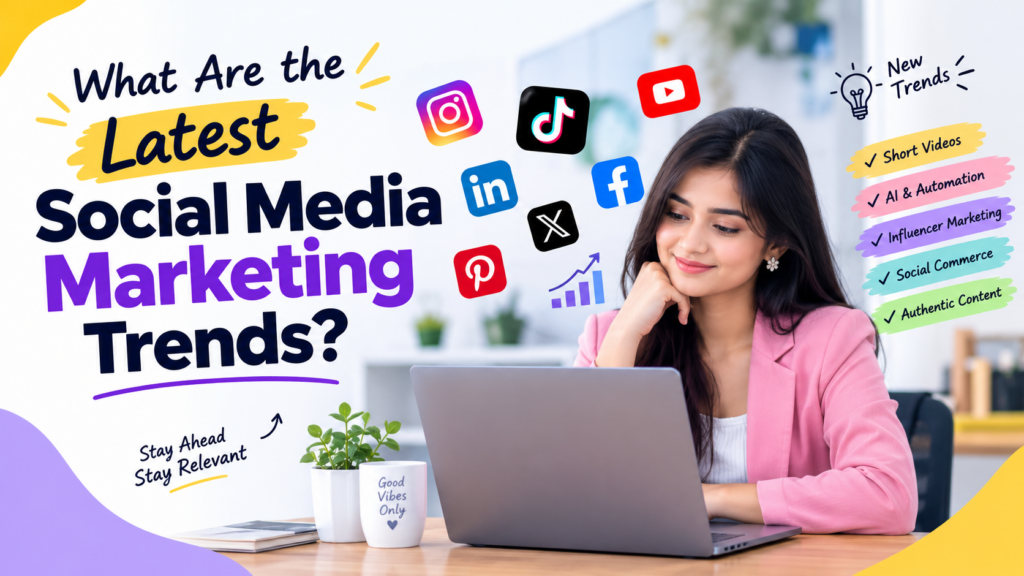
What Are the Latest Social Media Marketing Trends? Social media marketing is one of the most effective ways for businesses to connect with their audience, promote their products, and increase brand awareness. Platforms such as Instagram, YouTube, Facebook, LinkedIn, and TikTok help businesses reach potential customers and build strong relationships with them. In 2026, social media marketing is increasingly focused on artificial intelligence (AI), short-form videos, authentic content, influencer collaborations, and personalized customer experiences. Here are 7 important social media marketing trends that businesses and digital marketers should understand. 1. AI-Powered Social Media Marketing Artificial intelligence is changing the way businesses create, manage, and analyze social media content. AI tools can help marketers generate content ideas, write captions, create visuals, analyze audience behavior, and plan posts more efficiently. Why it matters: Example: A small business can use AI to brainstorm Instagram captions, prepare a weekly content calendar, and develop ideas for promotional videos. Tip: Use AI as an assistant, but review its output and add your own expertise, brand voice, and original ideas. 2. Short-Form Video Content Short-form videos remain an important format for attracting attention on platforms such as Instagram Reels, YouTube Shorts, and TikTok. Quick tutorials, behind-the-scenes clips, product demonstrations, and educational videos can communicate useful information in a short time. Why it matters: Example: A digital marketing agency could create a 30-second video explaining three simple SEO tips for beginners. Tip: Start with an interesting hook, deliver one clear message, and finish with a call to action. 3. Influencer and Micro-Influencer Marketing Influencer marketing involves collaborating with content creators who have an audience on social media. In 2026, brands are paying particular attention to micro-influencers, who typically have smaller, more focused audiences and may have strong relationships with their followers. Why it matters: Example: A local clothing brand can collaborate with a fashion creator to showcase its new collection through Instagram Reels. Tip: Choose influencers whose audience, values, and content match your brand. Evaluate engagement quality and conversions, not just follower count. 4. Social Commerce and In-App Shopping Social commerce allows customers to discover products, explore recommendations, and purchase items through social media or links to online stores. Shopping features, product tags, creator recommendations, and live product demonstrations can help connect content with sales. Why it matters: Example: A fashion business can share a Reel showing an outfit and direct viewers to tagged products or its online store. Tip: Use clear product descriptions, attractive images, accurate prices, and easy-to-follow purchase links. Check which shopping features are available in your country and on your chosen platform. 5. Authentic Content and User-Generated Content (UGC) Audiences increasingly value content that feels genuine, relatable, and useful. User-generated content (UGC) includes customer reviews, testimonials, photos, videos, and experiences shared about a brand. HubSpot’s 2026 social media research highlights authenticity as an important consideration for marketers. Why it matters: Example: A skincare brand can share a genuine customer review or a customer’s experience using its product, with permission. Tip: Be transparent about sponsored content, get permission before reposting customer content, and never create fake reviews. 6. Social Media Search and SEO People increasingly use social platforms to discover products, find recommendations, and learn new skills. Social media search optimization means making content easier to discover through relevant keywords, captions, titles, hashtags, and on-screen text. Why it matters: Example: A digital marketer publishing a YouTube Short about SEO can use a clear title such as “5 SEO Tips for Beginners” and include relevant keywords in the description. Tip: Research the words your audience actually searches for. Use them naturally in your content rather than stuffing posts with unrelated keywords or hashtags. 7. Community Building and Personalized Engagement Social media marketing is not just about gaining followers. It is also about building a community that regularly interacts with your brand. Businesses can create meaningful connections by responding to comments, answering questions, hosting live sessions, and sharing content based on their audience’s interests. Community building is one of the strategies highlighted in 2026 social media research. Conclusion Social media marketing in 2026 is evolving through AI-powered tools, short-form videos, influencer partnerships, social commerce, authentic content, social search, and community building. These trends offer businesses new ways to reach their target audiences, improve customer relationships, and grow their brands. However, businesses do not need to follow every trend. The best approach is to choose the strategies that match their audience, goals, and budget. Consistently publishing valuable content, engaging with followers, and measuring performance can help create a stronger social media presence.

Uncategorized

How can businesses generate leads online?

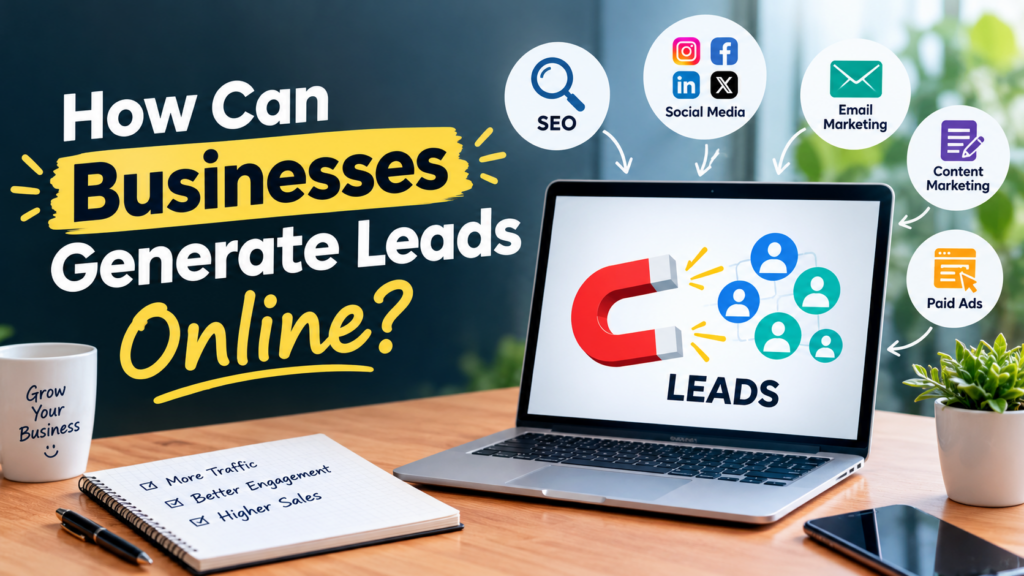
How Can Businesses Generate Leads Online? Online lead generation is one of the most important parts of digital marketing. It helps businesses attract potential customers, build trust, and turn website visitors into people who are interested in their products or services. A lead is a person who shows interest in a business by filling out a form, subscribing to a newsletter, requesting a quote, or contacting the company. 1. Search Engine Optimization (SEO) Search Engine Optimization (SEO) helps a website appear higher in search engine results, such as Google. When people search for products or services related to a business, SEO can help them discover its website without paying for every click. How SEO generates leads: Example: A digital marketing agency that publishes a blog about SEO services for small businesses may attract visitors who are looking for professional marketing help. 2. Social Media Marketing locusdigital.com Social media marketing helps businesses connect with potential customers on platforms such as Instagram, Facebook, LinkedIn, and YouTube. Businesses can share posts, videos, customer stories, and useful tips to build awareness and encourage people to contact them. How social media generates leads: Example: A clothing brand can share product videos on Instagram and direct interested viewers to its website to enquire or purchase. 3. Email Marketing Email marketing allows businesses to communicate directly with people who have voluntarily shared their email addresses. It is useful for building relationships, sharing offers, and encouraging potential customers to take the next step. How email marketing generates leads: Example: A digital marketing blog can offer a free SEO checklist to readers who subscribe to its newsletter. 4. Content Marketing pressmaster.ai Content marketing involves creating and sharing valuable information that helps people solve problems. Examples include blog articles, videos, infographics, tutorials, and downloadable guides. Good content builds trust and attracts people who are already searching for information related to a business. How content marketing generates leads: Example: A digital marketing website can publish an article about “How to Improve Website Traffic” and invite readers to request a free website audit. 5. Paid Online Advertising lucidmedia.co.nz Paid advertising helps businesses reach a targeted audience by paying to display ads. Popular options include Google Ads, Meta Ads on Facebook and Instagram, and LinkedIn Ads. Unlike SEO, which can take time to produce results, paid campaigns can begin attracting visitors as soon as they are running, although results depend on targeting, budget, and campaign quality. How paid ads generate leads: Example: A coaching institute can run Google Ads for people searching for digital marketing courses and direct them to a course enquiry form. 6. Landing Pages and Lead Magnets venngage.com A landing page is a dedicated web page designed to encourage visitors to complete a particular action. A lead magnet is a useful free resource or offer provided in exchange for contact information. Together, they can help businesses turn website visitors into potential customers. How they generate leads: Example: A marketing agency could offer a “Free Digital Marketing Strategy Consultation” through a landing page where visitors enter their name, email, and business details. 7. Analytics, Follow-Ups, and Lead Nurturing Generating leads is only the first step. Businesses must also understand which marketing activities are working and follow up with potential customers in a timely, helpful way. Analytics measures performance, while lead nurturing builds relationships with people who may not be ready to buy immediately. How this strategy generates more customers: Example: A software company can track demo requests, send interested prospects a helpful product guide, and arrange a demonstration for those who want to learn more. Conclusion Online lead generation helps businesses attract the right audience, build strong customer relationships, and increase sales. By using SEO, social media marketing, email marketing, content marketing, paid advertising, landing pages, and lead nurturing, businesses can create a more effective digital marketing strategy.

Uncategorized

What Is Digital Marketing ROI?

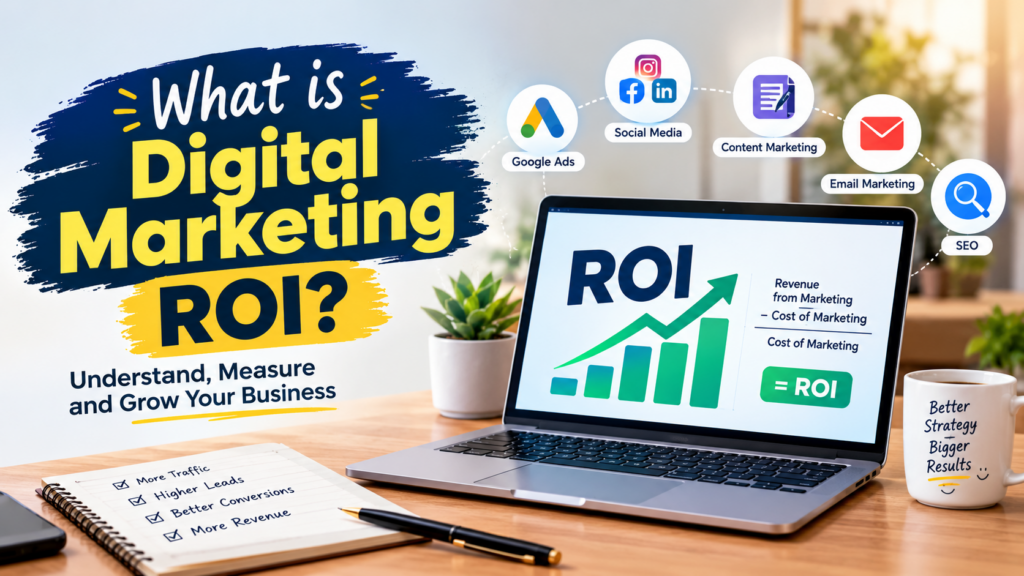
How to Measure Digital Marketing ROI. Introduction Digital marketing helps businesses reach their target audience through platforms such as Google, Instagram, Facebook, websites, and email. But how can a business know whether its marketing efforts are actually generating results? This is where Digital Marketing ROI (Return on Investment) becomes important. ROI helps businesses understand how much value they receive compared with how much they spend on marketing. Whether you are a freelancer, a small business owner, or a digital marketing professional, measuring ROI helps you identify successful campaigns, manage budgets effectively, and make better marketing decisions. In 2026, when businesses use multiple digital channels, tracking performance is essential for building an effective marketing strategy. 1. What Is Digital Marketing ROI? ommdigitalsolution.com Digital Marketing ROI measures the financial return generated by a marketing activity compared with its cost. It helps businesses evaluate whether their investment in advertising, SEO, social media, email marketing, or other digital channels is worthwhile. For example, imagine a small business spends ₹10,000 on an Instagram advertising campaign and generates ₹25,000 in revenue directly attributed to that campaign. The business has generated ₹15,000 more in revenue than it spent on the campaign. However, this does not necessarily mean it earned ₹15,000 in profit, because product costs and other expenses may also apply. Understanding this difference is important when evaluating marketing performance. 2. Understand the Digital Marketing ROI Formula podymos.com The standard ROI formula is: \[ \text{ROI}=\frac{\text{Return}-\text{Investment}}{\text{Investment}}\times100 \] For a more meaningful business calculation, use the net profit attributable to marketing after accounting for relevant costs, rather than treating all revenue as profit. Example: Suppose a business spends ₹20,000 on a digital marketing campaign and earns ₹50,000 in attributable revenue. The products sold cost ₹15,000 to produce, and the campaign cost is ₹20,000. ROI: \[ \frac{50,000-15,000-20,000}{20,000}\times100 =\boxed{75\%} \] The campaign generated a 75% ROI based on these stated costs. This calculation assumes no other relevant expenses and reliable attribution of the revenue to the campaign. A positive ROI indicates a return above the investment under the chosen calculation method. A negative ROI means the measured return did not cover the investment. 3. Why Is Measuring Digital Marketing ROI Important? Measuring ROI helps businesses understand whether their marketing budget is being used effectively. Without measurement, businesses may continue spending money on campaigns that generate clicks and likes but very few customers. The main benefits include: For example, if a business receives more qualified enquiries from Google Ads than Instagram ads, it can investigate the reasons and adjust its budget accordingly. 4. Key Metrics to Track pimms.io ROI is only one part of campaign measurement. Tracking additional metrics helps explain why a campaign performs well or poorly. Metric What it measures Website traffic Visitors coming to your website Conversion rate Percentage of visitors completing a desired action Cost per lead Average cost of generating a lead Customer acquisition cost (CAC) Average cost of acquiring a customer Return on ad spend (ROAS) Revenue attributed to advertising relative to ad spend Customer lifetime value (CLV) Estimated value a customer generates over the relationship For example, a campaign may generate many leads but few sales. Tracking both cost per lead and conversion rate helps reveal whether the issue lies in lead quality, the sales process, or the campaign itself. 5. How to Measure Digital Marketing ROI Step by Step chandlerflexrewards.com Use a consistent measurement period and avoid counting the same conversion more than once. Attribution can be imperfect when customers interact with several channels before purchasing. 6. Tools to Measure Digital Marketing ROI Several tools can help marketers track campaign performance and understand results. Choose tools based on your business goals, available budget, and tracking requirements. Conclusion Measuring digital marketing ROI is essential for understanding what works, improving campaign performance, and making smarter marketing decisions. By setting clear goals, tracking costs, monitoring relevant metrics, and calculating returns accurately, businesses can make better use of their marketing budgets.

Blog

Digital Marketing for Small Businesses in India

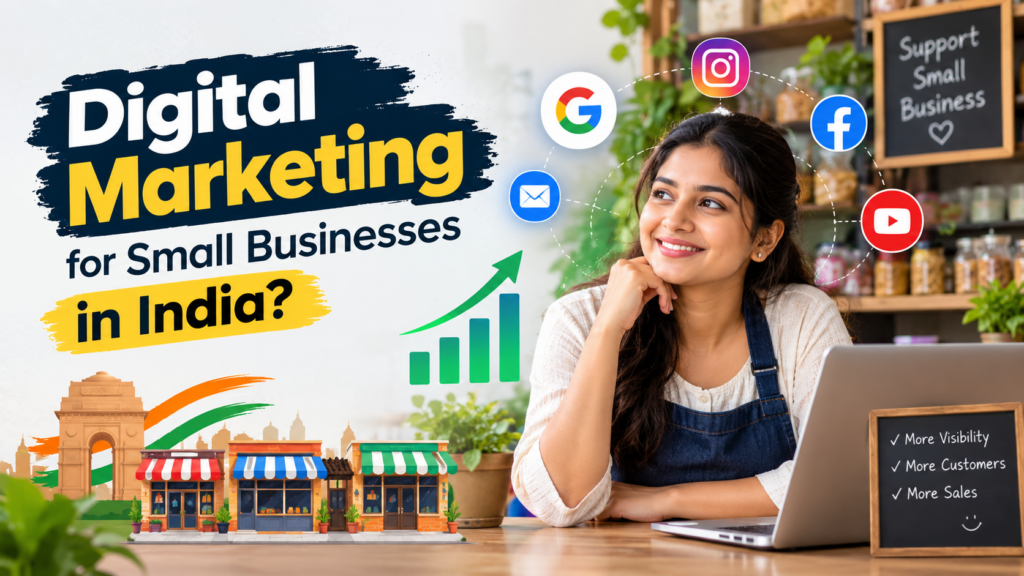
Digital Marketing for Small Businesses in India: A Complete Guide for 2026 Introduction Small businesses play an important role in India’s economy. From local boutiques and home-based businesses to cafés, salons, coaching classes, and online stores, many entrepreneurs are looking for ways to reach more customers and grow their businesses. In today’s digital world, having a good product or service is not always enough. Customers often search online, check social media profiles, read reviews, and compare options before making a purchase. This is where digital marketing for small businesses in India becomes valuable. Digital marketing helps businesses promote their products and services through online channels such as Google, Instagram, Facebook, websites, email, and WhatsApp Business. With the right strategy, even a small business with a limited budget can build brand awareness, connect with potential customers, and generate sales. 1. What Is Digital Marketing for Small Businesses? Digital marketing is the process of promoting a business using digital platforms and online technologies. Unlike traditional advertising, many digital marketing activities allow businesses to target specific audiences and measure results. For example, a small clothing boutique in Mumbai can showcase new collections on Instagram, appear in relevant Google searches, and communicate with interested customers through WhatsApp Business. The goal is not simply to be present on every platform. It is to choose the channels that help the business reach the right customers and achieve its objectives. 2. Why Is Digital Marketing Important for Small Businesses in India? restofworld.org Digital marketing offers several benefits to small businesses. For example, a home baker can share product photos and customer testimonials on Instagram, publish ordering information on WhatsApp Business, and promote seasonal offers to relevant local audiences. 3. Build a Strong Social Media Presence linkedin.com Social media marketing is one of the most accessible ways for small businesses to introduce their products, demonstrate their expertise, and interact with potential customers. Instagram can work well for visually appealing businesses such as fashion, beauty, food, and lifestyle brands. Facebook can help businesses connect with local communities, while LinkedIn may be more appropriate for business-to-business services. Small businesses can publish: Consistency matters more than posting randomly. A simple content calendar helps businesses plan useful content and maintain an active presence without overwhelming their budget. 4. Use Search Engine Optimization (SEO) dioramaeduversity.com SEO helps a business improve its visibility in search engine results without paying for every click. It is particularly useful for businesses that want to attract customers who are already searching for their products or services. Small businesses can improve their SEO by using relevant keywords on their websites, publishing helpful blog posts, creating dedicated service pages, and maintaining an accurate Google Business Profile. For example, a salon in Mumbai can create useful content around haircare services and maintain its local business information so potential customers can discover it more easily. SEO takes time and does not guarantee rankings, but consistent effort can help businesses build long-term online visibility. 5. Invest in Paid Advertising cosettemedia.com Paid advertising allows businesses to promote their products and services to selected audiences. Platforms such as Google Ads and Meta Ads offer options for reaching potential customers based on campaign objectives, location, and other targeting signals. For example, a local café can promote a special offer to relevant audiences nearby, while an online clothing store can advertise a new collection. Small businesses should begin with a manageable budget, establish a clear objective, and monitor results such as enquiries, purchases, and cost per lead. Increasing the budget makes sense only when campaign performance supports that decision. 6. Create Valuable Content and Build Customer Trust Content marketing involves sharing useful information that helps customers understand a product, solve a problem, or make a purchasing decision. Businesses can publish blogs, short videos, tutorials, product demonstrations, and customer stories. A home baker, for instance, could share baking tips, explain the ingredients used, and showcase the process behind custom cakes. Useful content builds credibility and gives potential customers reasons to engage with a brand. Instead of constantly promoting discounts, businesses should focus on educating, entertaining, and helping their audience. 7. Measure Your Digital Marketing Results Digital marketing becomes more effective when businesses regularly review their performance. Tools such as Google Analytics and platform-specific insights can help measure website visits, engagement, enquiries, and conversions. Small businesses should choose metrics that match their goals. If the objective is to generate leads, enquiries and cost per lead may be more useful than follower count alone. Reviewing these results helps businesses identify successful activities, improve weak campaigns, and spend their marketing budget more thoughtfully. Conclusion Digital marketing gives small businesses in India practical ways to increase visibility, reach potential customers, build trust, and grow their revenue. By combining social media, SEO, paid advertising, content marketing, and performance tracking, businesses can develop a strategy that suits their needs and budget. The key is to start with clear goals, understand the target audience, and remain consistent. You do not need a huge marketing budget to get started; you need the right strategy, valuable content, and a willingness to learn and improve.

Scroll to Top